Rotate or Regret: Giving SIM Cards a Working Retirement Date
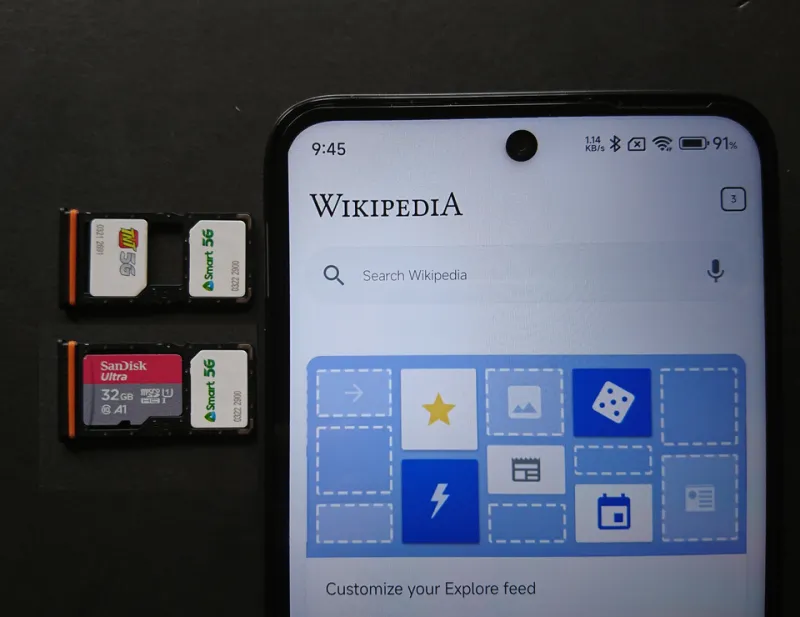
Photo: Paowee, CC BY-SA 4.0, via Wikimedia Commons
SIM cards are easy to treat as permanent fixtures. They are small, cheap relative to the rack around them, and they do not announce their decline. One day a card is handling authentication traffic like always; the next it is registering intermittently, adding retries to your SMS queue, or dropping off during a busy hour. The outage rarely starts with a clean failure. It starts with a slow degradation everyone tolerates until the queue backs up.
A rotation schedule is not about replacing every card on a fixed calendar. It is about moving risk out of critical paths before the risk turns into a ticket. For a US modem farm, that means looking at card age, contact wear, traffic role, and how much friction your carrier or MVNO will add when you need a replacement.
The failure mode is usually boring
Physical SIMs do not fail like disks. You rarely get a clean error that says replace me. You get intermittent registration, higher retry counts, SMS send failures that clear on a retry, or a card that works in one slot and misbehaves in another. Heat, humidity, dust, and repeated insertion cycles all work on the gold contacts and the plastic body. A card that has been reseated a dozen times in a hot rack has a different risk profile than one that has sat untouched in a low-traffic test slot.
Electrical wear is less predictable. Some cards run for years without trouble. Others get flaky after a few months in a harsh slot. That is why a rotation schedule should be risk-based, not superstition-based. You are not trying to predict the exact failure date. You are trying to avoid discovering the failure during your busiest hour.
Four inputs worth tracking
Start with four practical signals.
Card age. Activation date matters, but install date matters more. A card that sat in a drawer for a year is not the same as one that has been powered in a rack for a year. Track both when you can.
Contact and insertion history. Every reseat is a small event. Cards that get moved between slots during testing, troubleshooting, or rack rearrangements accumulate wear faster. If you do not track insertion count, at least track the number of known moves and the last time contacts were cleaned.
Traffic role. A card carrying authentication or transactional SMS is not a good candidate for experimental duty. High-value traffic should live on cards with clean histories and known-good spares nearby. Low-value test traffic is where older but still functional cards can finish their careers.
Carrier replacement friction. In the US, replacing a SIM is not always a five-minute swap. Business accounts may require an authorized contact, account PIN, or verification step. Some carriers and MVNOs tie provisioning to IMEI, APN settings, or plan features that need to be re-enabled. SIM swap protections are good for security and bad for speed. If replacement takes days, that card deserves a higher risk score.
A simple risk score
You do not need a data science project. A small score in your inventory sheet is enough. For example: in service more than 24 months, add two points; more than 12 known reseats, add two; primary transactional traffic, add two; any history of intermittent registration, add three; carrier replacement lead time over three days, add two; no pre-provisioned spare on hand, add two. Flag anything at five or above for review.
The numbers are not sacred. The point is to make the decision visible instead of relying on whoever remembers which card has been acting weird.
The rotation schedule
Run a quarterly review, not a weekly panic. Pull the flagged cards, check their recent error and retry history, and decide whether they stay in primary service, move to a secondary role, or get retired.
A useful pattern is graduated rotation. Primary cards handle revenue or authentication traffic. Secondary cards handle lower-stakes messaging, internal tests, or canary duty. Lab cards are already out of the critical path. When a primary card starts showing risk, do not wait for a hard failure. Move it down a tier if it still tests clean, and put a fresh or known-good card in the primary slot.
Do not rotate everything at once. Batch replacements by carrier and account so you are not spending a whole day in provisioning portals. Keep at least one pre-provisioned spare per active carrier profile if your contract allows it. A spare that requires a three-day carrier ticket is not really a spare.
US carrier quirks that slow replacements
Major US carriers and MVNOs have different replacement workflows. Some let you activate a replacement online with an ICCID and IMEI. Others require a call, a business verification step, or a store visit. Prepaid and MVNO accounts can be faster or slower depending on the portal. The common thread is that the ICCID on the card is not the only thing that matters: the line, plan, APN, and sometimes the device pairing all need to line up.
That is why inventory discipline pays off. When a card fails, you want the ICCID, MSISDN, carrier, plan, account number, and slot history in one place. Scrambling for a missing ICCID while messages are queuing is a bad use of an afternoon.
An inventory method that survives real life
Use a spreadsheet or a small database, but keep it boring enough that people actually update it. At minimum, track a short physical label ID, ICCID, IMSI if available, MSISDN, carrier, plan, activation date, install date, current slot, traffic role, known reseat count, last contact cleaning, last known good test, and replacement date. Print labels that are readable without a magnifier, and put the short ID on the card and in the sheet.
Reconcile the sheet monthly against the rack. Quarterly, review the risk flags. When a card moves, update the record that day. The goal is not perfect data. The goal is to answer one question quickly: which cards are most likely to embarrass us next month?
Retiring a card without creating a new problem
Before you pull a card, drain or pause its queue, note the slot, and confirm the replacement is provisioned and tested. Label the old card, update inventory, and keep it quarantined for a short period in case you need to compare behavior. Do not reinstall a suspect card into a primary slot just because it works for ten minutes. That is how a maintenance task becomes a repeat incident.
A rotation schedule will not make SIMs immortal. It will make their failures predictable enough to plan around. In a US modem farm, that is usually the difference between routine maintenance and a bad night.